
Reposts are a Love Language
If you’ve ever sent, received, or reposted a TikTok, instead of telling someone you feel, this is for you.
After years on social media, reposting has become an everyday habit. A coping mechanism. A soft confession. A red flag. A green flag. A full-blown relationship language. For Gen Z, the repost button is not so casual and meaningless. It’s a true form of communication.

Picture sourced from CNN
We grew up online. We learned how to express ourselves through memes before we learned how to verbalize our feelings. With nearly 1.9 billion users on TikTok, people have really adapted to communication through digital media. Instead of sitting someone down for an emotional conversation, we repost a TikTok that says exactly what we’re thinking and pray that they see it. That is TikTok communication. We like to act unbothered, but reposts let us express what we don’t want to put into words.
When you repost a video about missing someone, and they view your profile 23 minutes later? That’s tension. When you repost something about being overwhelmed and your friend texts, “Are you ok?” That's care. When you repost a video that perfectly describes your situationship and he suddenly changes his behavior? Thats strategy. It’s all indirect, but still so intentional.
It sounds dramatic and cringy, but repost culture has quietly reshaped Gen Z relationships.
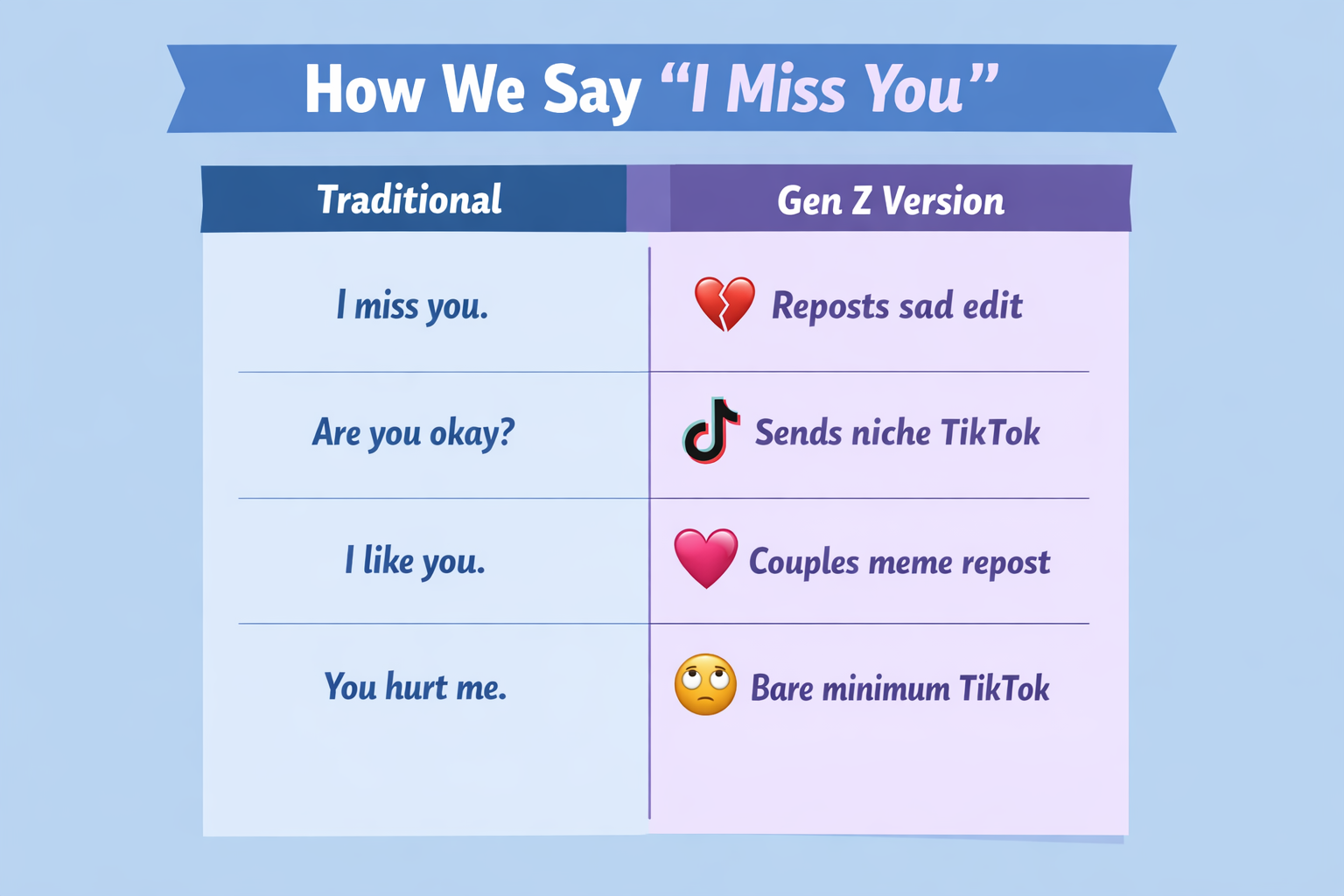
We use reposts to:
Crafted by AI
Hint
Flirt
Vent
Validate
Soft launch
A lot of us struggle with confrontation. We overthink texts, rehearse conversations in the shower, and so much more. Reposting lets us say something without technically saying it. It feels safer, less vulnerable. And if they don’t see it and respond, we can pretend it was “just a video.” But the truth is, it’s rarely just a video.
Weirdly, reposting has become a part of how we form identity. Reposts curate a subtle narrative about who you are: what you tolerate, what you romanticize, what you find funny, what you're healing from. People scroll your reposts the way previous generations read diary entries.
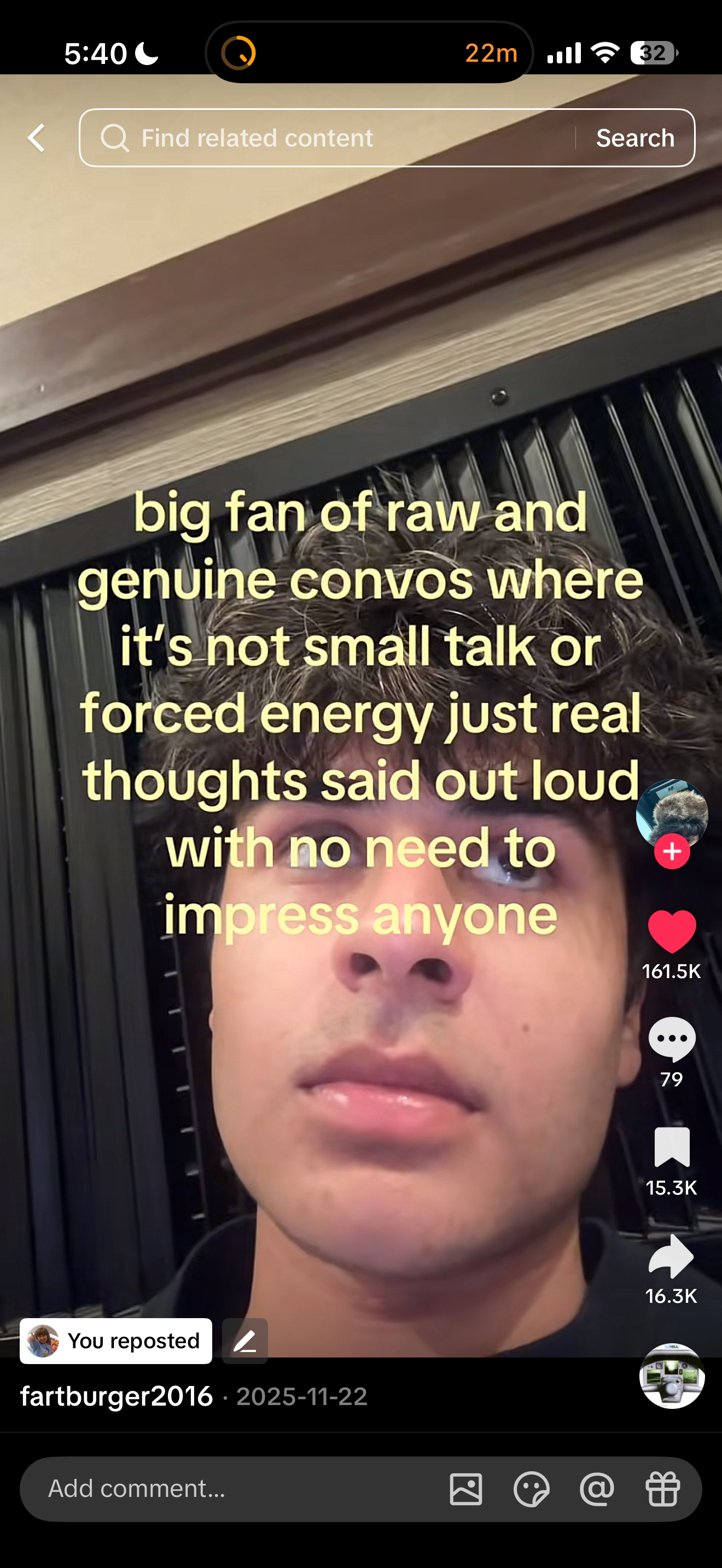
It’s powerful, but also complicated. TikTok communication works best when both people understand the language. If someone isn’t paying attention or doesn’t interpret the video the way you intended, the message gets lost. Then we’re frustrated over something that was never said clearly. Digital behavior has, in many ways, replaced traditional conversation in our relationships, specifically Gen Z. We assume awareness. We assume people saw it. We assume they understood. Sometimes they did, and sometimes they didn’t.
Screenshot from my phone
There’s something also uniquely comforting about repost culture. It creates this kind of unspoken understanding between friends and other people. When you and your roommate repost the same niche video about academic burnout at two in the morning, it feels like solidarity. When your friend reposts a TikTok that perfectly captures your friend group dynamic, you feel seen and valued. Reposts say, “this reminded me of you,” “this is how I feel,” and “I don’t have words, but this represents how I feel.” And that’s kind of beautiful.
But here’s where we have to do some self-reflection: are we using reposts to enhance connection, or to avoid vulnerability?
There’s nothing wrong with expressing yourself online. Internet culture is our shared, comfortable culture. With that being said, it shouldn’t completely replace direct communication. While reposts and other online activity can strengthen connections, they can also replace real conversation, which is not always beneficial. Reposts are a love language, but like any love language, they work best when paired with something deeper and more obvious.
So, repost the TikTok. But maybe also send the text. Because while reposts can say a lot, sometimes “I miss you” still hits harder when you actually type it, or say it.
